All articlesGeneral
AI Security for Small Business: How to Use ChatGPT and AI Tools Safely in 2026
25 August 20264 min readBy Omnicron Team
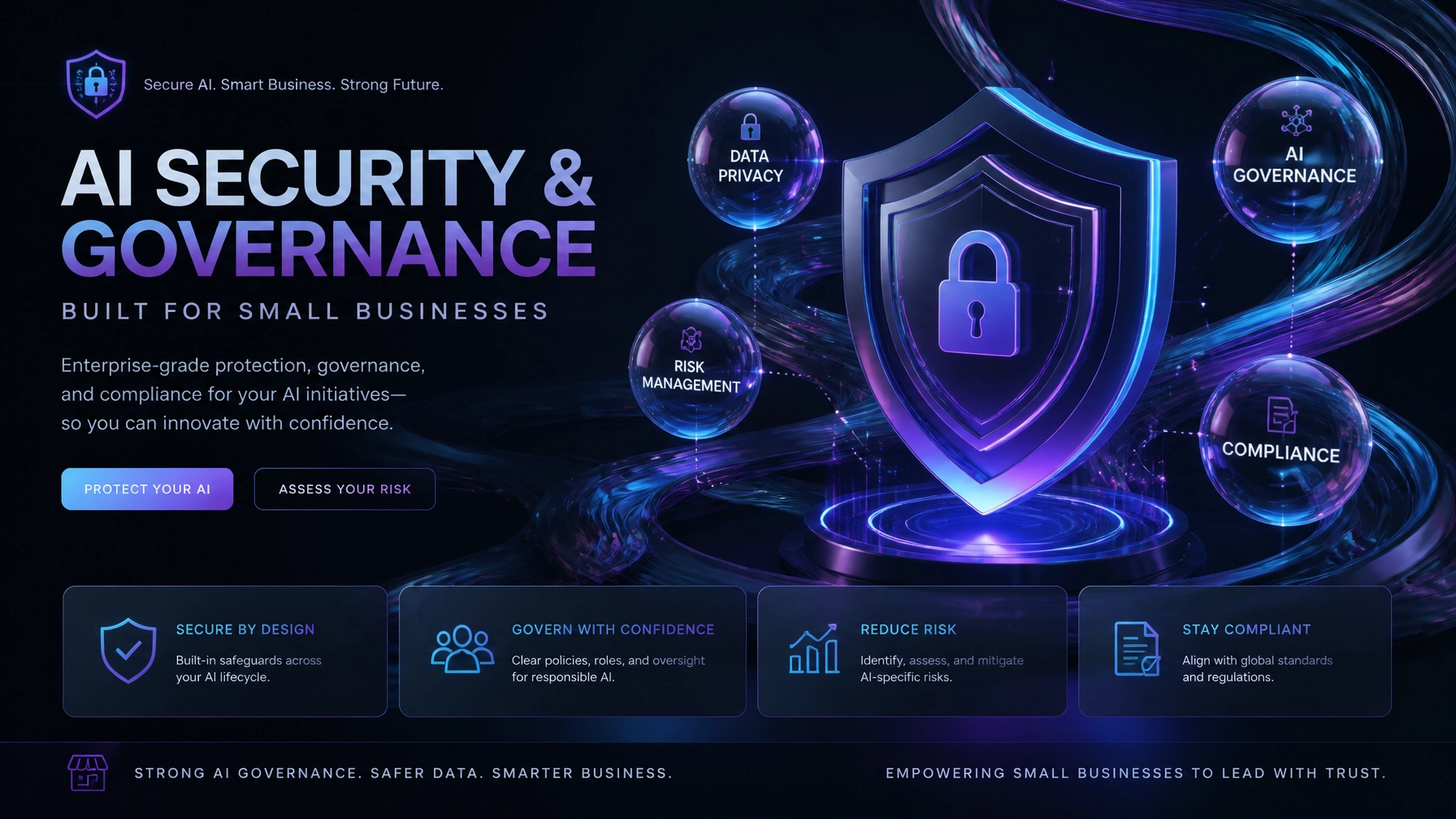
AI Security for Small Business: How to Use ChatGPT and AI Tools Safely in 2026

Artificial intelligence tools like ChatGPT, Claude, and Microsoft Copilot have transformed daily business operations across Victoria. From drafting client correspondence and summarizing financial reports to accelerating software development, generative AI offers unprecedented productivity gains. However, for small to medium-sized businesses (SMBs), unrestricted AI adoption introduces severe operational, legal, and security vulnerabilities.
Implementing a robust cybersecurity strategy for small business Australia requires addressing the hidden risks of generative AI. Rather than outright prohibiting AI: which often drives staff toward risky workarounds: forward-thinking organizations must establish clear governance, enterprise-grade tooling, and active monitoring through specialized managed IT services Melbourne.
When employees paste confidential documents, source code, or customer PII (Personally Identifiable Information) into consumer-grade AI chatbots, that data frequently becomes part of external training datasets. The Australian Cyber Security Centre (ACSC) highlights several critical risks:

Data Leaks and Privacy Breaches: Unsanctioned cloud tools lack enterprise guarantees. Uploading unencrypted customer databases or client records violates Australian Privacy Principles and can trigger mandatory reporting under the Privacy Act.
Shadow AI Exposure: In recent workplace studies, over 60% of employees admitted to uploading confidential company information into personal AI accounts. Shadow AI incidents frequently incur higher containment costs due to delayed detection and complex data scoping.
Intellectual Property (IP) Loss: Proprietary pricing strategies, trade secrets, and unpublished product specifications submitted to public AI platforms are permanently exposed to third-party vendors.
AI-Powered Phishing & Social Engineering: Cybercriminals now leverage advanced language models to craft hyper-targeted, flawless phishing campaigns tailored to Victorian businesses, bypassing traditional security awareness hurdles.
Banning AI tools entirely is rarely effective. Employees will simply use personal devices or browser extensions to bypass restrictions. Instead, organizations must govern AI usage through structured policies.
A comprehensive internal AI use policy should define:
Prohibited Data Types: Explicitly ban the upload of customer databases, financial records, health information, internal security configurations, and unreleased IP.
Approved Platforms Only: Mandate enterprise-tier tools where data is strictly isolated and never used for global model training.
Mandatory Human Review: Require human oversight for all outward-facing communications, contracts, and financial analyses generated by AI.
Through expert IT consulting Melbourne, Omnicron partners with local businesses to draft practical, legally compliant AI policies tailored to their operational workflows.
A common pitfall for SMBs is treating free consumer accounts and enterprise subscriptions interchangeably.

Deploying sanctioned tools like Microsoft Copilot integrated directly within your secure Microsoft 365 tenant ensures that corporate data never leaves your defined security boundary.
Governance must be backed by robust technical defenses. To protect your IT environment from unauthorized data leakage, consider implementing the following security measures:

Cloud Access Security Brokers (CASB): Monitor and control network traffic to unapproved AI platforms, blocking public LLM access while permitting sanctioned enterprise tools.
Data Loss Prevention (DLP): Deploy endpoint and email DLP rules to detect and flag sensitive keywords or financial data before prompts are submitted.
Endpoint and Browser Hardening: Restrict unauthorized browser extensions (such as third-party AI writing assistants and summarizers) that harvest screen and clipboard data.
Multi-Factor Authentication (MFA): Enforce phishing-resistant MFA across all authorized AI platforms and cloud accounts.
Integrating AI securely does not require halting business operations. Businesses can follow a structured four-week roadmap to achieve compliance and peace of mind:

Week 1 – Discovery: Audit existing employee AI usage and categorize sensitive internal data assets.
Week 2 – Policy & Vendor Assessment: Finalize your internal AI policy and vet vendor security certifications.
Week 3 – Technical Implementation: Deploy CASB rules, enable enterprise licensing, and enforce least-privilege access.
Week 4 – Training & Simulation: Educate staff on safe prompt hygiene and run simulated AI-driven phishing drills.
Navigating the intersection of artificial intelligence and cybersecurity requires specialized expertise. At Omnicron, our local Australian team helps Victorian businesses implement comprehensive security reviews, deploy enterprise AI solutions, and maintain continuous oversight through our Managed Protection plans.
Ready to secure your business against Shadow AI and data leakage? Contact our team today to schedule your tailored security consultation.
Book a free security check and we'll show you where your business stands clear next steps, no jargon, no obligation.
If you are unable to reach us by phone, please email admin@omnicron.com.au and a member of our team will respond promptly.
Or explore our free security tools — 30+ scanners, checkers and assessments, free with an account.