All articlesGeneral
Cybersecurity for Medical Clinics: A Complete Guide to Patient Data Protection in 2026
21 August 20264 min readBy Omnicron Team
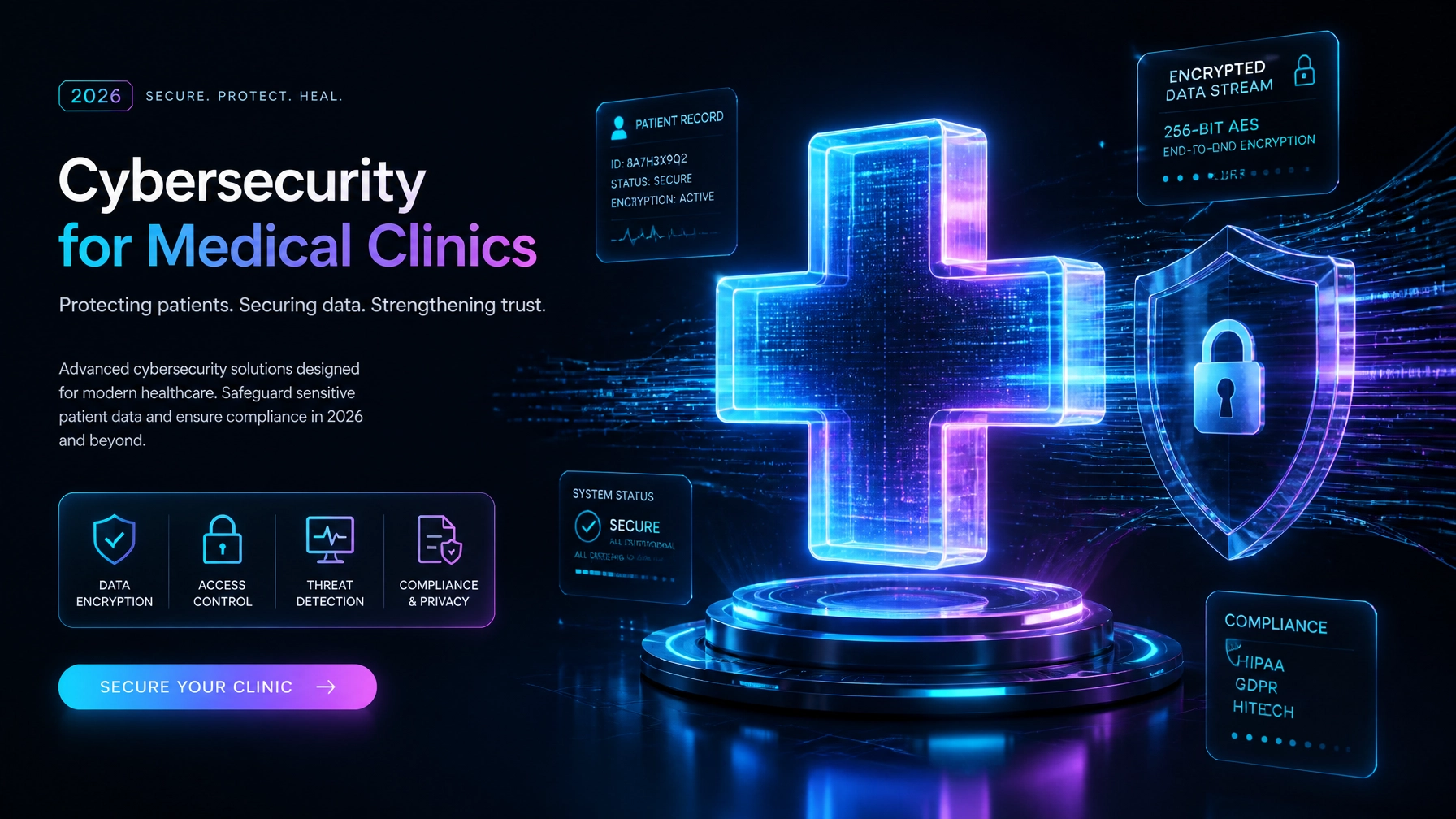
Cybersecurity for Medical Clinics: A Complete Guide to Patient Data Protection in 2026

The healthcare sector in Victoria faces an unprecedented volume of digital threats. As medical clinics increasingly adopt digital practice management systems, telehealth platforms, and cloud-based electronic health records (EHR), they also expand their digital attack surface. For practice managers and principal doctors, safeguarding sensitive health information is no longer just an administrative task: it is a critical clinical and legal responsibility.
Effective managed services and proactive security measures are essential to prevent catastrophic data breaches, operational downtime, and severe regulatory penalties.
Medical practices hold a vast repository of personally identifiable information (PII) and protected health information (PHI). Cybercriminals prioritize medical records over standard financial credentials because patient data commands a significantly higher value on the dark web: often up to 50 times the value of a stolen credit card.
A single comprehensive medical record contains names, dates of birth, Medicare numbers, private health insurance details, detailed diagnostic histories, and billing information. This depth of data enables sophisticated identity theft, fraudulent insurance claims, and targeted extortion through ransomware. For small to medium-sized enterprises (SMEs) operating in the healthcare space, a breach disrupts patient care and shatters practice reputation overnight. Implementing robust cybersecurity for small business Australia standards is foundational to safeguarding practice integrity.

Understanding where vulnerabilities lie is the first step toward building a resilient IT infrastructure. Most medical clinics struggle with specific technical and operational risk vectors:
Many clinics continue to operate legacy software and older operating systems that no longer receive official security patches from vendors. Cybercriminals actively scan for these known vulnerabilities to gain unauthorized entry into clinic networks.
Modern clinics utilize an array of connected medical devices: from digital diagnostic tools to networked imaging equipment. Frequently deployed with default factory passwords and lacking endpoint protection, these Internet of Medical Things (IoMT) devices serve as silent entry points for malicious actors.
Staff members accessing patient portals or practice emails on personal smartphones, tablets, or home computers without enterprise-grade mobile device management (MDM) introduce significant security blind spots.
Human error remains the leading cause of successful cyber intrusions. Phishing emails disguised as pathology requests, Medicare updates, or supplier invoices frequently deceive busy administrative staff into clicking malicious links or divulging credentials. Comprehensive staff security awareness is vital for effective cyber threat protection for SMEs.

Australia’s regulatory landscape has intensified. The Privacy Act 1988, reinforced by recent legislative updates including the Privacy and Other Legislation Amendment Act, imposes strict compliance obligations on health service providers.
Crucially, under the Privacy Act, health service providers are covered regardless of annual turnover, unlike many other commercial sectors subject to a $3 million threshold. This means solo practitioners and small suburban clinics must comply fully with stringent data protection mandates.
Key regulatory expectations include:
Reasonable Steps for Security: Practices must implement robust technical and organizational measures, including multi-factor authentication (MFA), end-to-end encryption for data at rest and in transit, and rigorous access controls based on the principle of least privilege.
Mandatory Data Breach Notification: Under the Notifiable Data Breaches (NDB) scheme, eligible data breaches compromising patient health information must be reported promptly to the Office of the Australian Information Commissioner (OAIC) and affected individuals.
Direct Civil Liability: Recent legislative enhancements introduce robust enforcement mechanisms and civil penalty provisions for inadequate data protection practices, underscoring the necessity of professional security reviews.

Generic IT support providers often focus exclusively on uptime while ignoring underlying security vulnerabilities. Omnicron delivers a specialized approach tailored specifically to the operational realities of Victorian medical practices.
Our security-first methodology ensures that patient confidentiality and network resilience are embedded into every layer of your IT infrastructure. Through our comprehensive service framework, we address your clinic's specific risk profile:
OmniShield Live Defence: Our proprietary monitoring system provides continuous, real-time visibility into threat detection, encryption status, and system uptime. You receive immediate alerts and rapid mitigation against unauthorized access attempts.
Encrypted Data Storage & Compliant Backups: We implement immutable, automated backup solutions that protect clinical databases against ransomware encryption, ensuring instantaneous recovery without data loss.
Proactive Vulnerability Management: We conduct rigorous security reviews to identify legacy software gaps, insecure endpoints, and misconfigured network permissions before attackers exploit them.
Local Australian Support: Our dedicated, local support team understands the unique compliance and operational demands of Australian medical clinics, delivering fast, expert resolution without offshore delays.

Protecting patient data requires a strategic transition from reactive firefighting to continuous managed protection. By partnering with Omnicron for specialised managed IT services for medical clinics, your practice achieves complete regulatory compliance, impenetrable data security, and absolute operational peace of mind.
Do not wait for a security incident to test your practice resilience. Take the first step toward absolute data protection today.
Book your free security assessment with our local Australian team to evaluate your clinic's current vulnerabilities and discover how Omnicron can secure your patient workflows.
Book a free security check and we'll show you where your business stands clear next steps, no jargon, no obligation.
If you are unable to reach us by phone, please email admin@omnicron.com.au and a member of our team will respond promptly.
Or explore our free security tools — 30+ scanners, checkers and assessments, free with an account.